
How Campus Placement Training Helps Students Become Job-Ready
How Campus Placement Training Helps Students Become Job-Ready
Completing a college degree is an important academic achievement, but preparing for professional employment requires additional skills and practical understanding.
Employers may assess technical knowledge, communication, problem-solving abilities and professional behaviour during recruitment.
Campus placement training helps students develop these competencies and understand the expectations of different employers.
At Sapkal Knowledge Hub, Nashik, career-readiness initiatives form part of the institution's published approach to professional development.
This guide explains how placement training supports students as they prepare to move from academic learning into the workplace.
1. What Is Campus Placement Training?
Campus placement training refers to organised activities that help students prepare for recruitment and professional responsibilities.
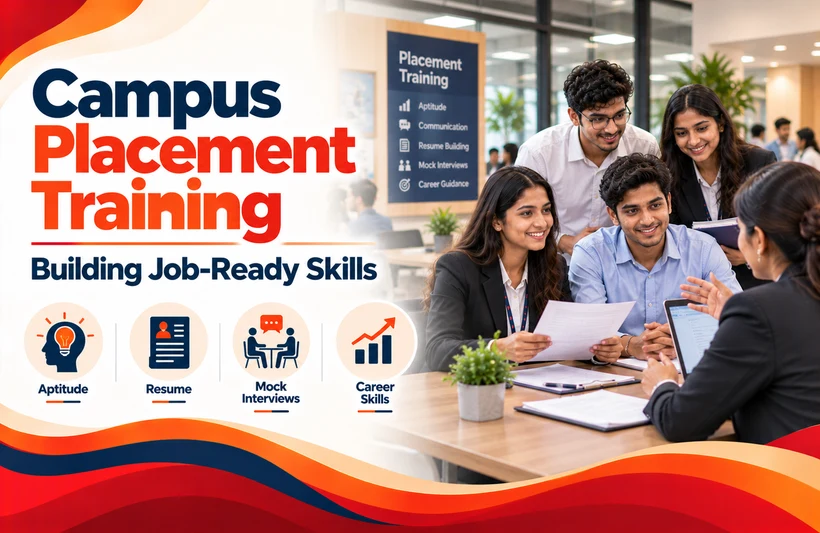
Depending on the institution, training may include aptitude preparation, communication development, resume writing, interviews and career guidance.
These activities help students understand common recruitment processes and identify areas for improvement.
Placement training supports employability but does not guarantee employment.
2. Why Is Job Readiness Important?
Academic knowledge provides a foundation for professional careers.
However, many positions also require communication, teamwork, adaptability, technical proficiency and workplace awareness.
Developing these abilities during college can help students approach recruitment more confidently.
3. Understanding the Campus Recruitment Process
Recruitment procedures vary between companies, job roles and industries.
Some employers conduct aptitude assessments, technical evaluations, group discussions or interviews.
Others may evaluate portfolios, projects, practical assignments or previous experience.
Placement preparation helps students become familiar with these possible stages.
4. Aptitude Training for Campus Placements
Aptitude assessments may test quantitative reasoning, logical thinking, data interpretation and verbal ability.
Regular practice helps students identify their strengths and weaker areas.
Sapkal Knowledge Hub's Engineering College lists aptitude training among its placement-readiness activities.
Students should prepare for assessment formats relevant to their target roles.
5. Communication Skills Development
Effective communication is valuable in interviews and professional workplaces.
Students should learn to explain ideas clearly, listen carefully and communicate respectfully.
Training may involve presentations, professional writing, group discussions and verbal communication exercises.
Improving these skills can support interactions with recruiters, colleagues and clients.
6. Resume Writing and Profile Development
A resume presents a candidate's educational qualifications, skills and relevant experiences.
Students should include accurate details about academic projects, internships, achievements and certifications.
A well-organised resume makes it easier for recruiters to evaluate relevant qualifications.
Students should avoid adding invented experience or exaggerated technical abilities.
7. Mock Interview Preparation
Mock interviews allow students to practise responding to common recruitment questions.
They can provide feedback on communication, explanation of projects and professional presentation.
Students may also become more familiar with technical and behavioural interview formats.
The Engineering College's placement information specifically documents mock interview training.
8. Preparing for Technical Interviews
Technical interviews evaluate knowledge and abilities relevant to a particular position.
Engineering candidates may be assessed on programming, design principles or branch-specific concepts.
Pharmacy candidates may encounter questions about pharmaceutical knowledge, quality procedures or professional responsibilities.
Management candidates may be evaluated on business concepts and specialisation-related topics.
Preparation should focus on the actual requirements of the intended position.
9. Group Discussions and Teamwork
Some recruitment processes use group discussions to evaluate communication and collaborative behaviour.
Students should practise presenting reasoned viewpoints and listening to different perspectives.
Effective participation involves contributing meaningfully without dominating the discussion.
Teamwork is also valuable in academic projects and professional environments.
10. Professional Etiquette and Workplace Behaviour
Professional etiquette includes appropriate communication, punctuality, responsible conduct and respect for colleagues.
Students may also benefit from learning formal email writing, meeting behaviour and workplace ethics.
These abilities are relevant during internships, interviews and employment.
11. Importance of Internships
Internships can introduce students to professional tasks and workplace expectations.
They may help students understand how academic knowledge is applied in practical settings.
Depending on the programme, students may complete supervised projects or other approved assignments.
Internship opportunities and requirements differ by institution, course and employer.
12. Industry Interaction and Guest Lectures
Interactions with industry professionals can help students understand recruitment expectations and developments in their fields.
Guest lectures, pre-placement talks and company presentations may introduce different career roles.
Sapkal Knowledge Hub's Central Training & Placement Cell describes industry interactions and pre-placement engagement among its career-development initiatives.
13. Developing Problem-Solving Skills
Professional work often involves identifying problems and evaluating possible solutions.
Students can develop these abilities through projects, case studies and appropriate practical exercises.
Explaining the reasoning behind a solution can also be useful during recruitment interviews.
14. Building Confidence Through Preparation
Confidence often develops through consistent learning, realistic practice and constructive feedback.
Students can strengthen their preparation by reviewing academic subjects, practising interviews and improving their resumes.
Preparation does not remove every uncertainty, but it can help candidates understand their abilities and present them accurately.
15. Understanding Industry-Specific Skills
Different career fields require different technical and professional competencies.
Software roles may require programming knowledge, while pharmaceutical positions may emphasise scientific understanding and regulatory awareness.
Management roles may require analytical, organisational and communication skills.
Students should review job descriptions to identify the skills most relevant to their career interests.
16. The Role of Career Guidance and Mentorship
Career guidance helps students explore professional options and understand educational or employment requirements.
Mentorship can provide opportunities to discuss career goals, review skills and identify development priorities.
Students should actively seek relevant advice while taking responsibility for their own learning.
17. Starting Placement Preparation Early
Placement preparation should not be limited to the final semester.
Students can begin developing communication, digital literacy and problem-solving skills during earlier academic years.
A consistent approach allows time for projects, technical learning and interview preparation.
The Engineering College's published information describes aptitude development beginning from the second semester.
18. Common Mistakes During Placement Preparation
Students should avoid preparing only for a single interview without understanding the job description.
Other common mistakes include copying generic resumes, overstating project contributions and neglecting technical fundamentals.
Relying only on advertised salary packages can also lead to unrealistic expectations.
Preparation should emphasise genuine skills and suitable opportunities.
19. Campus Placement Preparation Checklist
Students can use the following checklist to review their readiness.
| Preparation area | What students should do |
|---|---|
| Career goals | Identify relevant industries and roles |
| Aptitude | Practise reasoning and numerical questions |
| Technical knowledge | Revise subject-specific fundamentals |
| Resume | Include accurate skills, projects and achievements |
| Interviews | Practise and review feedback |
| Communication | Improve speaking and professional writing |
| Projects | Prepare to explain individual contributions |
| Internships | Document genuine practical experience |
| Professional etiquette | Understand workplace conduct |
The checklist should be adapted according to the course and target position.
20. Campus Placement Training at Sapkal Knowledge Hub Nashik
Sapkal Knowledge Hub maintains a Central Training & Placement Cell supporting students across its Engineering, Pharmacy and Management institutions.
Its official placement information describes career guidance, aptitude and communication training, professional skill development, internships and employer interactions.
Late G. N. Sapkal College of Engineering publishes detailed placement-training information covering aptitude, interviews, resumes and technical preparation.
K. R. Sapkal College of Management Studies also documents placement-oriented activities, corporate interactions and skill development.
Training schedules and participation arrangements should be confirmed with the relevant institution.
Conclusion
Campus placement training helps bridge the gap between academic learning and professional expectations.
Aptitude practice, communication development, resume writing, mock interviews and industry exposure can strengthen students' preparation for recruitment.
However, successful employment depends on qualifications, skills, individual performance and available opportunities.
Students who begin preparing early and continue developing relevant competencies can approach their career journeys with greater clarity.
Frequently Asked Questions
1. What is campus placement training?
Campus placement training consists of activities that help students prepare for recruitment, interviews and professional workplace expectations.
2. How does aptitude training help students?
It provides practice in reasoning, quantitative aptitude, verbal ability and related assessment skills used in some recruitment processes.
3. Why are mock interviews important?
Mock interviews allow students to practise communication and receive feedback before attending actual interviews.
4. Does placement training guarantee a job?
No. It supports preparation, but employment depends on eligibility, recruitment criteria, performance and available vacancies.
5. When should students start placement preparation?
Students can begin developing general professional skills early in college and increase role-specific preparation as their career goals become clearer.
6. Does Sapkal Knowledge Hub provide career-readiness support?
Yes. Its official website describes a Central Training & Placement Cell and career-development activities across Engineering, Pharmacy and Management.